Showing posts with label Illinois. Show all posts

Wednesday, August 24, 2011

Eastern Bluebirds - Texas Birds

Eastern Bluebird, Texas; 6/22/2011.
Bluebirds are always fun to spot and watch. A pair of Eastern Bluebirds (Above) made their home in a birdhouse on my sister's property in Texas. Every mourning, you could see them flying back and forth between the bird house and the garden.
Eastern Bluebird, Rock Cut State park, IL; 4/9/2011.
Earlier in the spring, I caught a good pic of an Eastern Bluebird (Above) in Rock Cut State Park, near where I live in Northern Illinois.
Sunset of the Day
Illinois sunset on Pierce Lake in Rock Cut State Park; 6/14/2007.


Sunday, March 13, 2011

Killdeer

The striking markings of a Killdeer, Puerto Morelos, Mexico; 12/24/10.
Killdeers are one of the very first birds I remember as a child, and one of the very first that I could identify by its flight, its looks, and especially by its distinctive call - from which its name is derived. My parents rented a house that was on a working farm, and Killdeers were always hanging around the cow pastures and the freshly plowed fields surrounding our house.  Killdeers are found both near water as is the one (Above) that we saw in the marshes of Puerto Morelos, and on dry land quite a distance from water sources. They lay their eggs on bare ground - often times in relatively high traffic areas such as on bare gravel along sides of roads or even along the edges of parking lots. Because they lay their eggs in highly suseptible areas, whenever a predator may venture too close to their nest, they will put on their "broken-wing display" by acting as if they are a vulnerable prey to lure the predator away from the nest.

a Killdeer t the Horicon marsh Wildlife Refuge, Wisconsin; 5/29/10.

Killdeers are found throughout the U.S. They are year round residents of the southern half of the U.S. as well as along both coasts. in the summer they can be found throughout all of the lower 48 contiguous states, most of Canada, the southern half of Alaska, as well as into the northern half of Mexico. In winter they will migrate as far south as the Southern half of Mexico, Central America, and Columbia and Venezuela in South America.

A Killdeer in Rockford, IL; 5/18/09.


A Killdeer in Phoenix, AZ; 12/25/09.

Can you spot the crocodile hidden in this photo of the Great Kiskadee; Puerto Morelos, Mexico; 12/24/10.
In my final crocodile pic (Above), I was taking a photo of a Great Kiskadee - in the tree in the top right of the pic- and again, it wasn't until I was looking through my photos on my memory card, did I realize there was a crocodile present in the picture. It was well-camouflaged in front of the base of the tree trunk and the muddy bank it was sitting on. It looked like it was ready to pounce on something. This little island with the tree on it was adjacent to the muddy bank of land that the killdeer was sitting on (top photo), which also had a crocodile on it (yesterday's post). I am totally amazed how such a large creature can be so well-hidden in plain sight.

Saturday, February 5, 2011

Palm Warblers and Isla Contoy Marine Life

A Palm Warbler in its non-breeding plumage, foraging on a walking trail, Isla Contoy, Mx; 12/21/10.
Again, after stalking what I was hoping to be an exotic bird from Mexico, I ended up with a photo of a Palm Warbler (Above).  I saw many Palm Warblers at our own Blackhawk Springs Forest Preserve this past fall as they were on their southern migration from Canada and the Northeast U.S. to their winter grounds in the South east U.S. and Mexico. Perhaps I saw one of the same birds? (Below)

A Palm Warbler, Blackhawk Springs Forest Preserve, Rockford, IL; 10/3/10.
A Palm Warbler taking a bath in a stream, Blackhawk Springs Forest Preserve, Rockford, IL; 10/3/10.
I have only once seen a Palm Warbler in its breeding plumage. They are very pretty - their pale eyebrow turns yellow and they sport a reddish cap on their heads and reddish streaks on their chest and belly (much like a Yellow Warbler's reddish streaks). I have a photo from Bauman park (Rockford, IL; 5/5/10) but the lighting is poor and you wouldn't be able to see its breeding plumage; however, (Below) is a good drawing from wikisource.org to show their breeding plumage.
Images of Palm Warblers in their breeding plumage; wikisource.org
                    MARINE LIFE PHOTOS FROM ISLA CONTOY

A Jellyfish floating in the muddy waters of the lagoon near the nesting site of the Magnificent Frigatebirds, Isla Contoy, Mx; 12/21/10.

From the docking pier, Val took the photos of these two fish in the clear water of the beach, Isla Contoy, Mx; 12/21/10.
Does anyone know what type they are?

A Manta Ray swimming in the beach water, Isla Contoy, Mx; 12/21/10.

Our Tour Guide (Ulysses) feeds fish to the Manta Ray, Isla Contoy, Mx; 12/21/10.

A Needlefish in the clear water off the pier, Isla Contoy, Mx; 12/21/10.

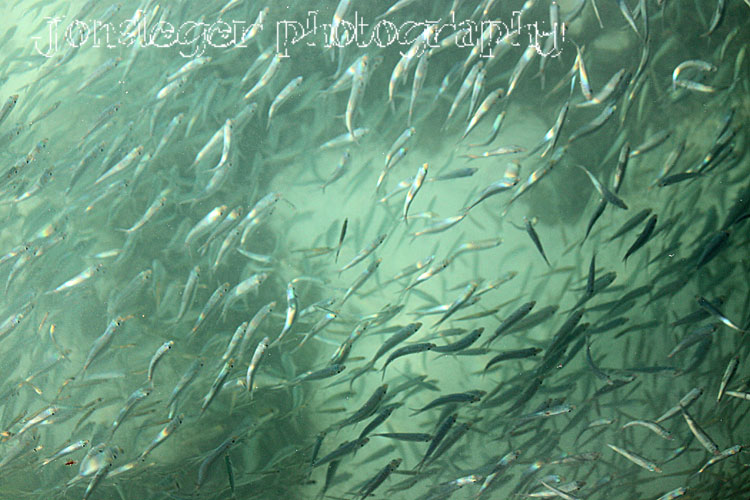
A school of Sardines  in the clear water off the pier, Isla Contoy, Mx; 12/21/10.

The Brown Pelicans were dive bombing this water continuously to feed on these Sardines, Isla Contoy, Mx; 12/21/10.


Friday, December 3, 2010

Snowy Owl

A Snowy Owl, resident of the Lincoln Park Zoo, Chicago: 10/30/10.
As a rule I want to try to keep the photos in this blog to be of wild birds, but this gorgeous Snowy Owl (Above) was way too striking not to include it. It did take some creative maneuvering to get this photo without having fence wire in front of it. But I finally managed to find a position that didn't have trees, people or other obsticals in the way and was able to stick my lense in between the wire mesh to get this clear unabated shot.

Unfortunately for us Northern Illinoisians, Snowy Owls rarely come this far south. The farthest south their winter homes extend is just a bit north of here in southern Wisconsin and will range all the way into Canada. In the summer months, they can be found on the open tundra in the arctic circle and the northern most regions of Canada and the northern coast of Alaska.

NOTE (Added on 1/30/11): Fortunately for us Northern Illinoisians, a Snowy Owl was sighted in Ogle County, IL, in late January of 2011.  Check out my blog post on 1/29/11 link below:

http://northernillinoisbirder.blogspot.com/2011/01/snowy-owl-sighting-in-northern-illinois.html

Sunday, November 28, 2010

White-throated Sparrow

A White-throated Sparrow with its bright yellow lores hanging around the Alfred Caldwell Lily Pond, Lincoln Park, Chicago; 10/30/10.

Another bird that I saw plenty of while meandering through the Alfred Caldwell Lily Pond was the White-throated Sparrow (Above) and (Below) while walking around the Jarvis Migratory Bird Sanctuary in late October. I featured this Sparrow species on my 8/26/10 post.   http://northernillinoisbirder.blogspot.com/2010/08/white-throated-sparrow-10.html

I saw another White-throat at the Jarvis Migratory Bird Sanctuary, Chicago Lakefront; 10/30/10.

Saturday, November 27, 2010

Purple Finch, Alfred Caldwell Lily Pond

A male Purple Finch showing off its colors at the Alfred Caldwell Lily Pond, Lincoln Park, Chicago; 10/30/10.
Also found in Lincoln Park, adjacent to the Zoo, is the Alfred Caldwell Lily Pond. It is a great little secluded pond that has an abundant of species of birds: In particular on our late October visit, as we walked through this small area, I saw lots of Purple Finches and white-Throated Sparrows. I have seen many House Finches at my backyard feeder, and occaissionally a female Purple Finch (Below) is among the House Finch crowd, but this is the first time I recall spotting a male Purple Finch (Above) at a close enough range for a decent photo.

Although not a clear pic, a female Purple Finch was flocking around with House Finches last fall at my backyard feeder; Rockford; 10/25/09.

Friday, November 26, 2010

Trumpeter Swans

A pair of Trumpeter Swans enjoying the warm afternoon of late October, South Pond, Lincoln Park, Chicago; 10/30/2010.
Another great water bird we saw swimming in the South Pond in Lincoln Park were a pair of Trumpeter Swans. 
As I stated in my Oct. 10 post on this blog ( http://northernillinoisbirder.blogspot.com/2010/10/trumpeter-swan.html ), Trumpeter Swans have been revived from near extinction and are now found in healthy populations in and around many of the Great Lakes.  The Zoological Society of Lincoln Park has been very active in helping the Trumpeter Swans be reestablished in Illinois. Two Trumpeter Swans were bred and released into the wild by the Zoo which was founded in 1868 when the Lincoln Park Commissioners were given a gift of a pair of these majestic swans. In 1874, the swans were joined by a bear cub, the first animal purchased for the zoo.

 Check out the link below that details information about Lincoln Park's activity dealing with Trumpeter Swans:

http://abclocal.go.com/wls/story?section=news/local&id=6209319

The Trumpeters get their names because they (both males and females) give off a loud and deep honking calls that sound like a bugle or trumpet. Sometimes they trumpet once, and sometimes twice. When two trumpeter swans greet each other they set off a great, loud display of honking and spreading their wings. All this noise is produced in its voice box - called a "syrinx." - which is so long it coils around the swans’ breast bone.

Sunday, November 21, 2010

Red-breasted Merganser

A female Red-breasted Merganser just emerged from a dive, Lincoln Park, Chicago: 10/30/10.
As promised, the third of four additions to my life list also came from our late October visit to Lincoln Park, Chicago. We saw a couple of female Red-breasted Mergansers floating and diving in the pond just south of the Lincoln Park Zoo. Unlike the Hooded Merganser which will spend the entire year hear (11/20 Post), the Red-breasted Merganser is more likely to be passing through while on its southern migration from its summer home in Northern Canada (also the shores of Lake Superior) to its winter home along the Atlantic Coast and south to the Gulf Coasts of Louisiana, Texas, and Florida.  As much as I searched, I couldn't locate a male Red-breasted Merganser which sports a dark head and of course a red breast.  The female Red-breasted is very similar to the female Common Merganser, but is distinguishable with a color contrast from the darker brownish top of the head with the pale reddish cheek and neck; whereas the Common's head is mostly all one brownish red color. The Red-breasted's bill is more slender and not as deep red as the Common's. I thought I'd post a photo of a Common Merganser to show the contrast, but, alas, my photos of the Common Merganser were too gray and didn't show the colors very well.


Two more pics of a female Red-breasted Merganser, Lincoln Park, Chicago: 10/30/10.

In honor of the upcoming Thanksgiving, I plan on four posts (Thur - Sun) to show off my pics of four other birds observed during our Chicago Lincoln Park and Jarvis Migratory Bird Sanctuary visit.

Saturday, November 20, 2010

Hooded Merganser


A Hooded Merganser with raised crest or "hood", North Pond, Lincoln Park, Chicago; 10/30/10
With all my excitement about finally seeing a Wood Duck (11/19/10 Post) in the wild (as wild as Chicago might be), there was another very attractive looking water bird swimming in the midst of the Mallards and Wood Ducks, that I barely noticed it until Val pointed it out. - a Hooded Merganser - Cool! Another first for me - and in the same setting.  Its black (face, scapulars and neck) and white (side of the head and breast) upper body is attractively set off by its reddish brown sides.  When raised (Above), the crest of this Merganser looks like a "Hood" - hence its name. The white spot is enlarged when the hood is raised, and looks like a stripe when the crest is lowered (Below).
A Hooded Merganser with lowered crest, North Pond, Lincoln Park, Chicago; 10/30/10
Hooded Mergansers are a yearlong residents of Northern Illinois - often found in sheltered ponds and bays. They seem to prefer ponds near a wood setting where they nest in the cavities of standing dead trees. In the summers, Hooded Mergansers will migrate as far north as the Hudson Bay, Canada; while winters are spent as far south as the Gulf Coast.  We are lucky that they will spend the entire year in the southern Great Lakes regions.
Another Hooded Merganser, North Pond, Lincoln Park, Chicago; 10/30/10
Tomorrow I will highlight another first for me - the Red-breasted Merganser. The North Pond was good to me in late October.

Friday, November 19, 2010

Wood Ducks, North Pond, Lincoln Park & Jarvis Migratory Bird Sanctuary, Chicago


A pair of Wood Ducks (male & female) at North Pond, Lincoln Park, Chicago, IL; 10/30/10.
Even in a large urban setting like Chicago, there are still places that one can go to observe wildlife, and of course, birds.  A couple of weeks ago, I spent a few hours at two such places: Lincoln Park and the Jarvis Sanctuary.
Lincoln Park is well known for its Zoo, but also has two large ponds that attract waterfowl during their migratory routes: sensibly named "The North Pond" and "The South Pond."  While hoofing around the North Pond, I observed, not only the usual Mallard Ducks and Canada Geese, but also several other species: Mergansers (both Hooded and Red-Breasted), American Coots, Ruddy Ducks, a pair of Trumpeter Swans, a trio of Gray-Fronted Geese, and the bird I went there in hopes of seeing - Wood Ducks (Above). Believe it or not, I have never seen the colorful Wood Duck in the wild before, and I heard that they are often seen in at the North Pond. So off we went in search of Wood Ducks and more - we were not disappointed.  We saw several small flocks of Wood Ducks mixed in with Mallards, Coots, and Mergansers. Wood Ducks are found largely in the Midwest, Northeast, and the southern portions of Canada in the summer months and will migrate down to the Southeast section of the country in winter. They also live along the Northwest Pacific Coast year round.  They are so beautiful to observe that even after I knew I had some very good pictures of them, I kept taking more (Below)
Male Wood Duck, North Pond, Lincoln Park, Chicago; 10/30/10

Female Wood Duck, North Pond, Lincoln Park, Chicago; 10/30/10

Male Wood Duck, North Pond, Lincoln Park, Chicago; 10/30/10

Pair of Wood Ducks, North Pond, Lincoln Park, Chicago; 10/30/10
I was told by a grounds keeper that some of the Wood Ducks found at the North Pond are actual permanent residents, but many are also wild. I really couldn't tell which were wild or not, and then wondered if I could add them to my Life List. But my dilemma was later satisfied when I visited the Jarvis Migratory Bird Sanctuary (off of Lakeshore Drive and Addison Street) and spotted a young male Wood duck sitting quietly in a marshy area (Below).  Initially I thought it was a female Wood Duck, but its pinkish white bill, white verticle stripe on its cheek, and yellow eyes told me it was a male without its full regalia of plumage.

Young male Wood Duck; Jarvis Sanctuary, Chicago; 10/30/10.
It is worth noting that the Bill Jarvis Migratory Bird Sanctuary ( http://jarvissanctuary.com/ )  is an excellent place to spot birds. It is a haven of approximately 8 acres of woodland and wetland habitat located smack dab in the middle of a very populated busy lakeshore recreation area. Fortunately for the birds but unfortunately for birders, it is enclosed by a protective fence. However, there is a wood chip path leading around the perimeter of the sanctuary and on the East side, a large viewing platform which provides a heightened perspective of the two lakes on this side of the park, along with information to identify the many species of birds that visit or live here. The number and variety of species of birds that use this small parcell of land during migration is astonishing. I took the pic of the Wood Duck above through the fence, so it is fairly easy to get photographs even if we are not allowed inside the sanctuary. That is a true meaning of a sanctuary.

Tomorrow and the next couple of weekends I will highlight other birds that I photographed at Lincoln Park: Trumpeter Swans, Hooded Merganser, Red-Breasted Merganser, Purple Finch, Gray-fronted Goose, and the White-throated Sparrow.

Sunday, October 17, 2010

Eurasian Coot and American Coot

We saw lots of Coots while in London last April: on the Hampton Court grounds, at Regents Park and St. James Park - the three areas where we saw the most birds. The Eurasian Coots are very similar to our American Coots. Coots are often mistaken as ducks, but they have more of a bill like a chicken than a duck, and do not have a duck's webbed feet. They possess lobed toes which are very long and used as a defense weapon.


Eurasian Coot, Hampton Court, London, UK; 4-5-10

Eurasian Coot, St. James Park, London; 4-8-10

As the photos suggest, the Eurasian Coot is a squat marsh bird found in slow moving fresh or coastal waters. They are all black with a white bill and frontal shield. Its eye-rings are red and legs are yellowish-gray. As I stated above, their toes are long and lobed, not webbed like other water fowl. Coots are very aggressive towards other water birds. They are common in Europe and if they appear at all in the Western Hemisphere it would be rare occurances in the islands off of Alaska or on the far Eastern coast of Canada - Newfoundland and Labrador.


American Coot, Saguaro Lake, Arizona; 12/26/08.
The American Coot (Above) is very similar to its Eurasian counterpart. Some of the differences appear in its bill and facial shield. The American Coot's upper facial shield often is red, but sometimes can be white or gray. The tip of its white bill has a dark ring.  When I visit Arizona in the Winter, Coots are anywhere there is water: large lakes, small ponds and even golf course water hazards (Below). The Coots I see in winter have gray legs, but when they are in their breeding plumage, the legs turn yellow. In summer they breed from throughout Canada to Northern Midwest and from upstate New York to the Northeastern states. In winter they will stay southward down the western and southwestren U.S.  In a rare sighting this past April, 2010, I spotted a Coot on our own lake in Rock Cut State Park near Rockford, IL (Bottom), probably on its migration northward.
American Coots on the ocotillo Golf Course, Phoenix, AZ; 12/29/09

American Coots taking flight; Phoenix, AZ; 12/29/09
A lone American Coot resting on Pierce Lake, Rock Cut State Park, Rockford, IL; 4/18/10.

Friday, October 15, 2010

European and American Robins

American Robin, Bauman Park, Rockford, IL; 5/16/09

Young American Robin, Rockford, IL; 6/15/07

The next few weekends I'll highlight a few birds that Val and I saw in London, England, while visiting there last Spring of 2010, with a group of high school Theatre students from Guilford High School in Rockford.

While most of my photos of Great Britain mostly dealt with Historical Places and Architecture, I did manage to get a few pics of birds - some that we find in North America and some that are unique to England and Europe. I'll start with the European version of the Robin. We of course have the ubiquitous American Robin (Above) that can be found almost anywhere from the center of major cities to the deep woods and mountains, from Alaska (summers only) to the tip of Florida (winters only).  The European Robin is much smaller and has less red on its breast, but is very pretty (below).

European Robin, Regents park, London, UK; 4/10/10.

European Robin, Regents Park, London, UK; 4/10/10